Morphological Evolution of Lithium Dendrites
Morphological Evolution of Lithium Dendrites
For details, see the [Lonxun WeChat article] and [Revealing Morphology Evolution of Lithium Dendrites by Large-Scale Simulation Based on Machine Learning Force Field].
Lithium-ion batteries offer high energy density and are widely used in electric vehicles and large-scale energy-storage systems. Lithium-metal anodes combine the lowest chemical potential with high capacity and are therefore promising for next-generation batteries with higher specific energy. During repeated charge-discharge cycles, however, lithium-metal anodes undergo dendrite growth and severe volume changes. Dendrites reduce Coulombic efficiency, energy density, and stability; once sufficiently long, they may pierce the separator, contact the cathode, and cause a short circuit or fire. Controlling dendrite growth is therefore essential to the development of lithium-metal anodes.
Advances in transmission electron microscopy (TEM) allow direct observation of lithium-dendrite morphology and phase structure. Nevertheless, limited spatial and temporal resolution leaves the dynamics of morphological evolution poorly understood. Existing simulations typically use phase-field methods or empirical force fields, whose limited accuracy makes it difficult to predict realistic dendrite morphologies. Large-scale simulations with atomistic accuracy are therefore needed.
Machine-learning methods trained on quantum-chemical calculations provide both accuracy and speed. A force field trained on accurate small-system data can extend simulations of alkali metals and other materials toward mesoscopic or even macroscopic scales. Potential-energy-surface data may also come from density-functional-theory calculations that represent realistic environments, such as lithium atoms in an implicit electrolyte, making realistic dendrite-evolution simulations possible.
This example uses molecular dynamics driven by a MatPL machine-learning force field to simulate the morphological evolution of lithium dendrites in an electrolyte environment. It reveals the dendrite-growth mechanism and supports the development of lithium-metal anode materials.
Accelerating model development with DFT-accuracy atomic-energy labels
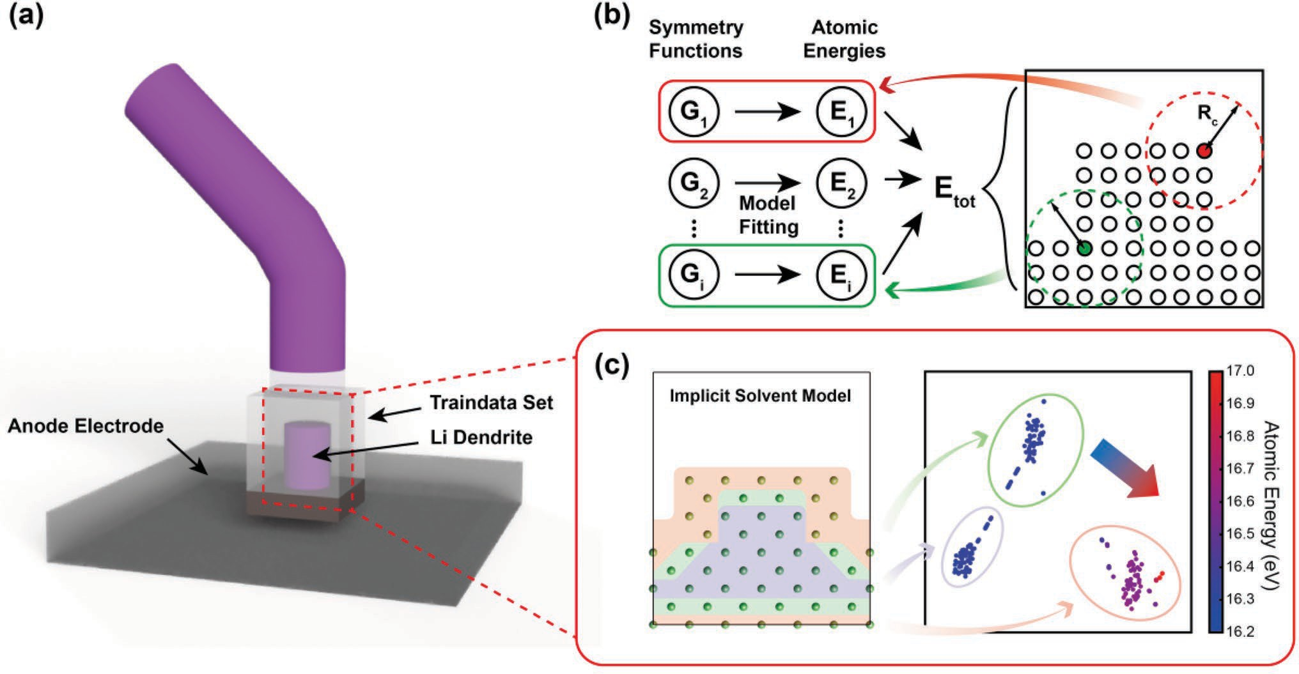
(a) Composition of the small-scale dendrite dataset; (b) MLFF architecture; and (c) cross-sectional view of the body-centered-cubic structure and visualization of descriptor-atomic-energy relationships.
Active-learning and validation strategy for cross-scale force-field applications
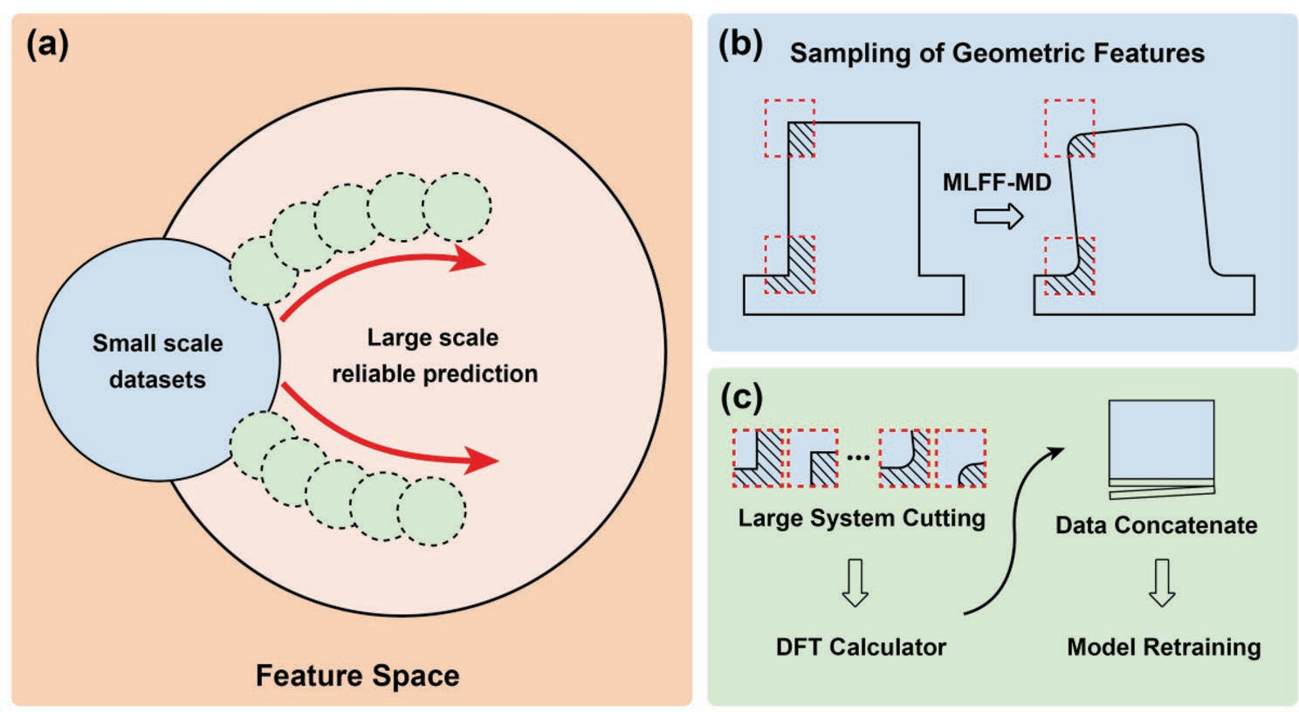
Schematic of active learning for cross-scale simulations: (a) data sampling during active-learning model expansion; (b) sampling key changing regions from MLFF molecular-dynamics trajectories; and (c) DFT labeling of the selected regions followed by model retraining.
Morphological evolution and driving-force analysis for dendrites with different initial configurations
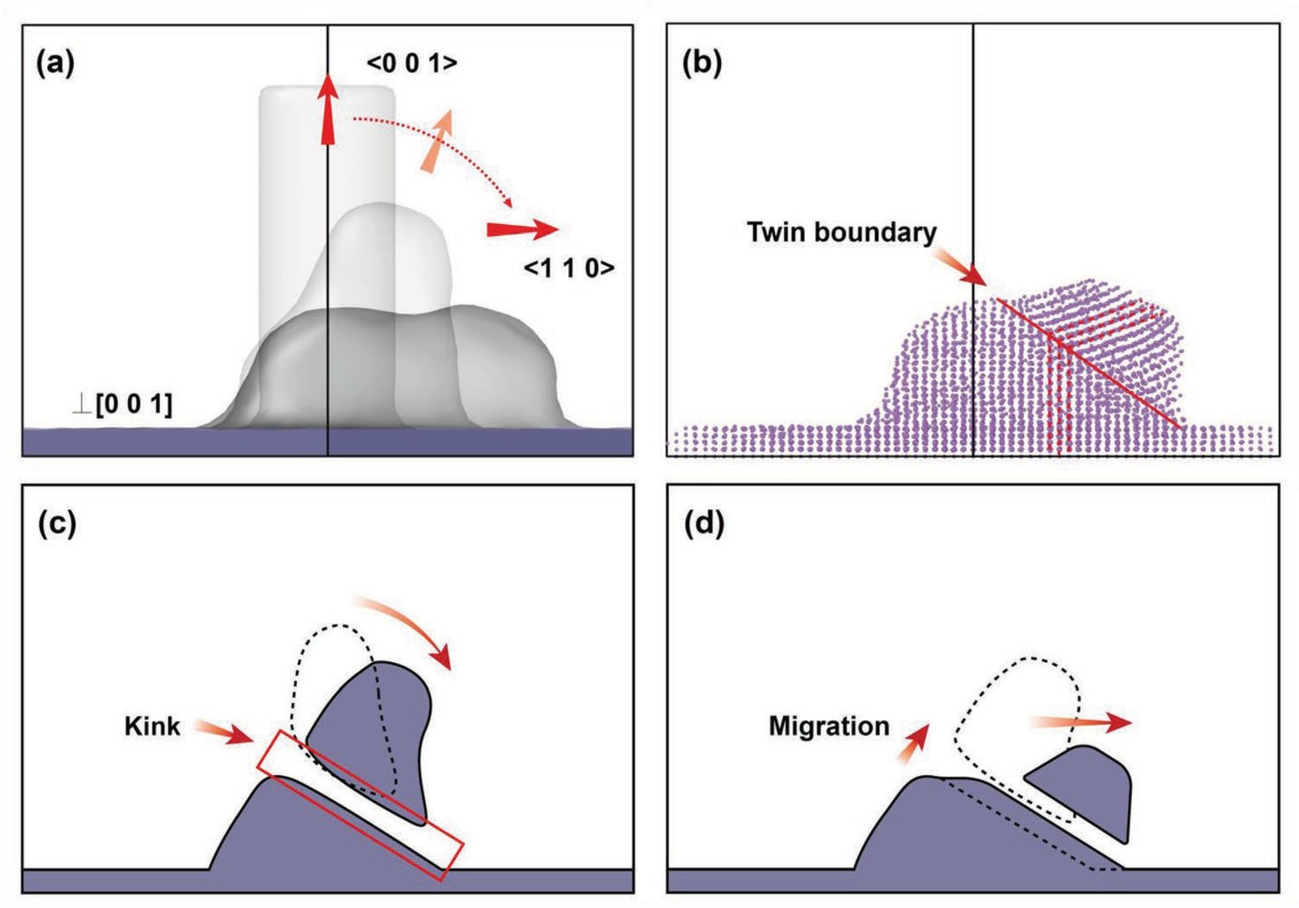
Morphological evolution of a cylindrical structure
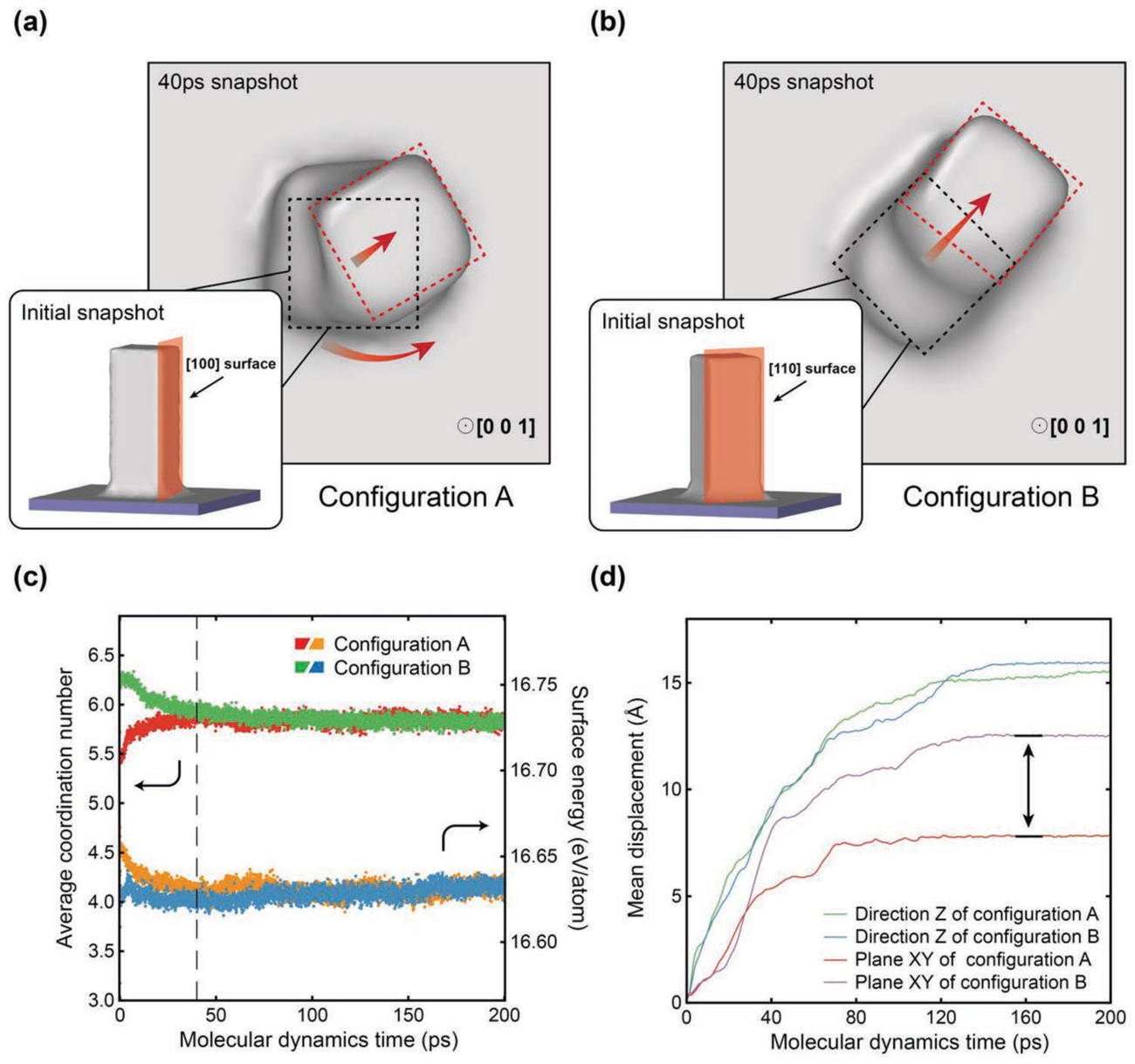
Morphological evolution of rectangular structures with different exposed surfaces